TRIVIAN INSTITUTEIn relatione fieri
RESEARCH AT TRIVIAN INSTITUTE
How we relate to intelligence
shapes what we become.
AI is becoming part of how people learn, write, reason, and make decisions.
Our research asks what happens to the person participating in that exchange. Does repeated interaction help us think more clearly, recognize uncertainty, and make our own choices? What conditions support that growth?
WHAT WE MEAN BY RELATIONAL AI
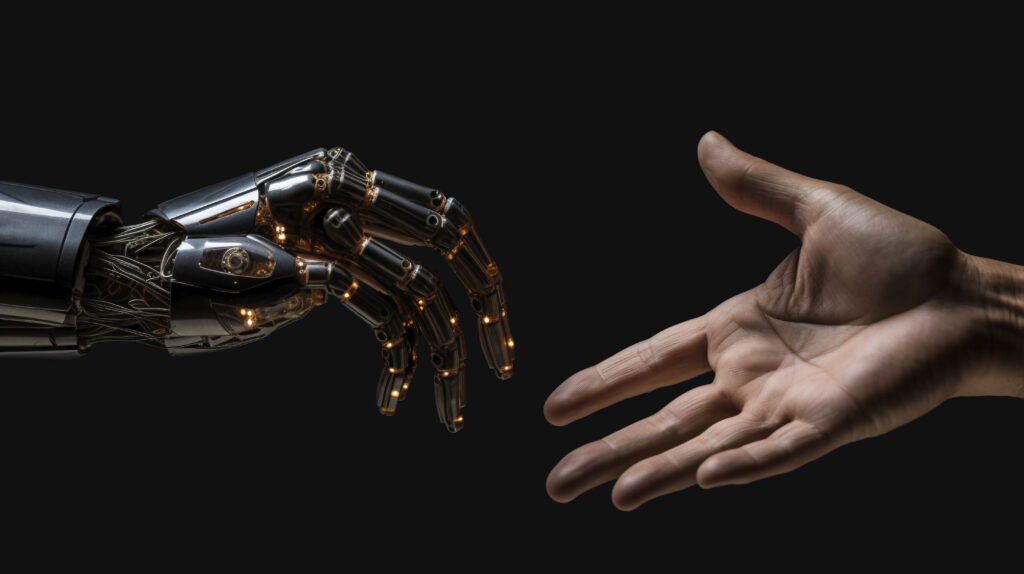
Look at what happens between people and systems.
Imagine an AI writing partner that remembers your preferences. That memory may help you develop an idea. It may also keep returning you to familiar assumptions.
Can you question its suggestions? Change its role? Withdraw permission? Take a different direction?
Relational AI examines these patterns over time: how trust develops, how influence accumulates, how disagreement is handled, and whether participants can meaningfully change the relationship.
OUR CURRENT INQUIRY
Can AI help people become more capable thinkers?
We are developing a comparative study of repeated engagement with a conventional language model and a TRIA-governed system.
The study will examine how participants:
- Notice and explain their own thinking.
- Check sources and recognize uncertainty.
- Develop ideas and consider alternatives.
- Question suggestions and make independent decisions.
We also ask how attention and embodied experience shape participation.
The study design is in development. Its purpose is to test whether these approaches help, where they fall short, and whether any benefits persist.
FROM A QUESTION TO A WORKING SYSTEM
TRIA makes parts of the relationship inspectable.
TRIA—the Trivian Relational Intelligence Architecture—is an experimental software architecture for representing aspects of interaction explicitly.
Its components explore questions such as: Who authorized an action? Where did information come from? What changes when permission is withdrawn? How can disagreement and continuity be represented?
The open-source SDK provides a working entry point for developers and researchers. Trivian Institute’s teaching lab introduces these ideas through a small local project.

PUBLICATIONS
A connected body of work.
These public papers develop the concepts, methods, and architectures behind the research. Follow each DOI to read the deposited paper and its record.
A methodology for studying collaboration through sustained interaction.
DOI: 10.5281/zenodo.21466615
A structural account of relational principles and multi-agent coherence.
DOI: 10.5281/zenodo.21095206
An exploration of relational principles as governance architecture.
DOI: 10.5281/zenodo.21088231
A proposed layer for representing relational state.
DOI: 10.5281/zenodo.21117753
An account of meaningful difference and resistance to premature convergence.
DOI: 10.5281/zenodo.21119629
An architecture for exploring relational coherence across networks.
DOI: 10.5281/zenodo.21153895
An examination of continuity and consent as relationships change over time.
DOI: 10.5281/zenodo.22817992
An integrated account of the architecture and its components.
DOI: 10.5281/zenodo.22733294
A compatibility analysis and research agenda for hybrid computational approaches.
DOI: 10.5281/zenodo.21954307
RESEARCH WITH US
Bring a question worth testing.
We welcome researchers, educators, and technical teams interested in human–AI interaction, learning, reflective thinking, and participant agency.
Help refine a study, examine an implementation, or investigate where the architecture succeeds and where it needs to change.
